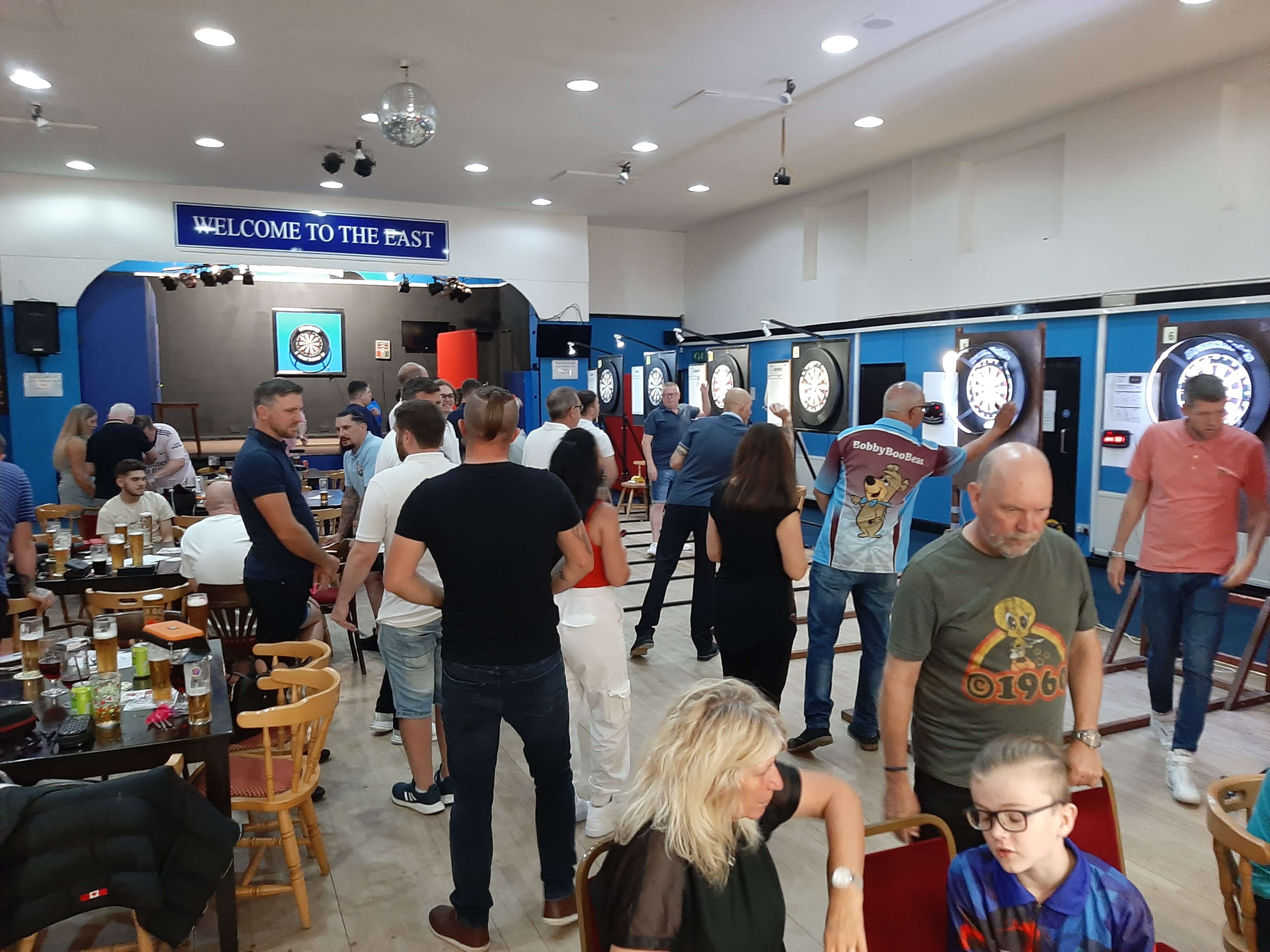
Sheerness East WMC is an established community institution that hosts a diverse array of activities every day of the week, for members and non-members alike. Alongside the club’s lounge and bar (which is reserved for members on certain nights) it offers a large 300-capacity function room as a flexible space to meet the needs of the wider community.
In 2010, when Club Secretary Paula Smith and her husband started managing the club, their ambition was to make it a family-oriented community space. Over the last decade and a half, they’ve focused on unlocking the potential of the building and its facilities to accommodate a now fully-booked programme of events for all ages, interest groups, and abilities.
Typically open 15 hours a day, the function room plays host to a wide range of activities for both members and non-members, including line and sequence dancing, chair yoga, boogie tots, indoor bowls, a choir and multiple dementia groups. At the same time, the member’s lounge hosts local darts teams across the week and various meetings for groups like the Women’s Institute, and classes like flower arranging and socials for the deaf community.
Listening to the needs within the community is what led to the club stepping in to become one of the UK’s first COVID testing centres when other venues in the area were not ready to provide this service. Building on this relationship with the local NHS Trust, they now also host a Blood Donation Unit once a month, continuing to make it a recognised and regular space for health checks for local residents.
While members use the club across the week, 90% of the event hires are by local groups, charities, and the NHS. They don’t charge many of these groups, and where they do it's minimaI – mainly in the cases where the group is charging their own clients for a service or event.
In line with the club’s strong ethos of inclusion, and the non-transactional nature of member-owned spaces, there is also no expectation that every person coming through the door will be a ‘customer’ – this lack of commercial pressure really ensures everyone feels welcome.
Today, many social clubs, which will have previously primarily served workers from a particular trade or industry, are becoming more like East Sheerness Working Men’s Club – vital community centres for local residents who cannot access other local facilities, or find more safety and intimacy in these not-for-profit membership spaces.