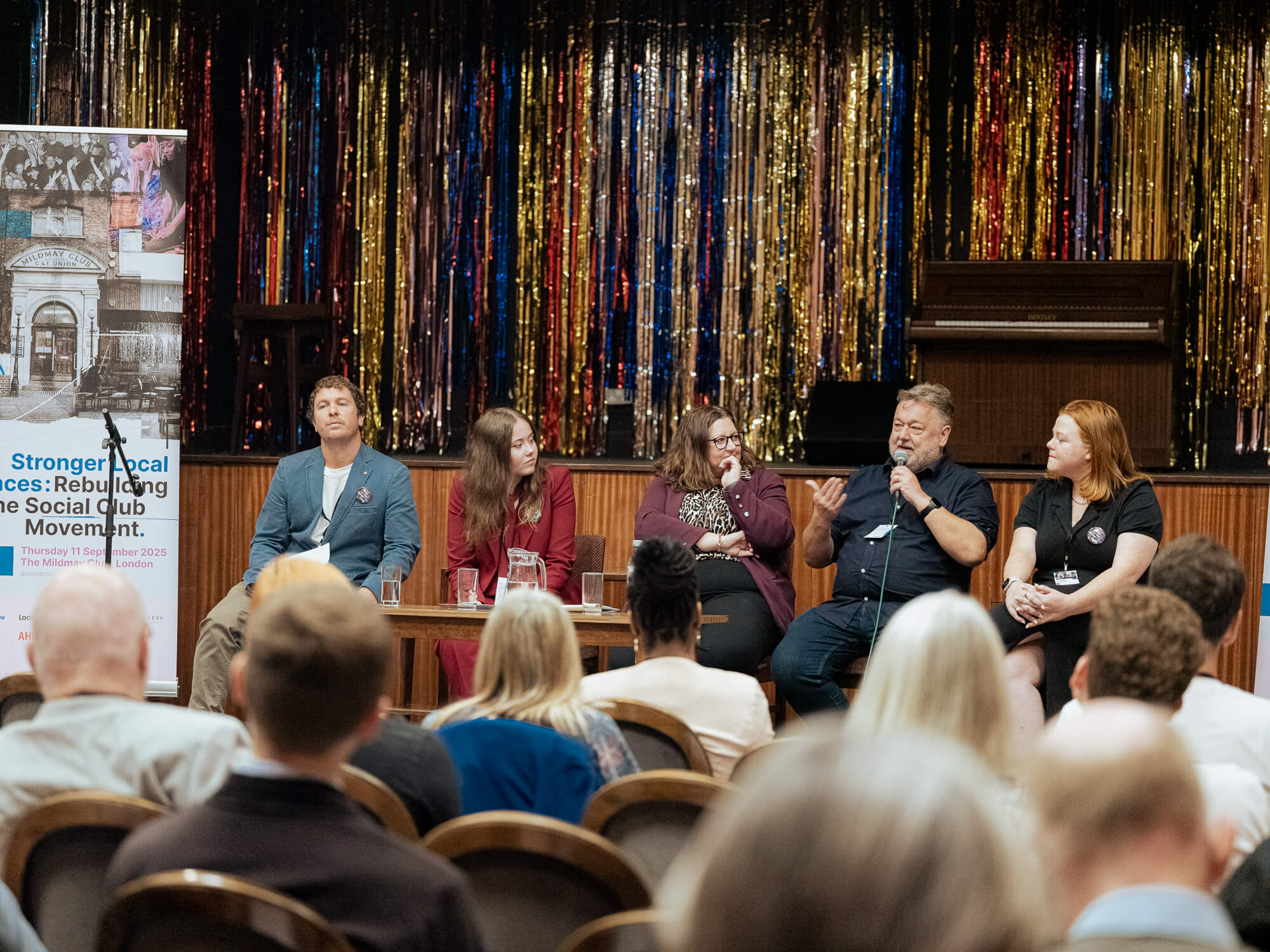
Launched at the 21st Century Social Clubs: 2025 Inaugural Conference, this report is informed by a series of roundtable conversations with club members in Bilston (Scotland), Hebden Bridge (Yorkshire), and Walthamstow (Greater London), it sets out the pressures clubs are facing, the support they need, and the case for a new 21st Century Social Club Charter between the sector and government.
Why government support for social clubs is now urgent
Social clubs have been part of community life in Britain for more than 150 years, providing spaces where people organise, socialise, and support each other. But more and more clubs have closed in recent years, and many of those that remain are operating in difficult conditions, shaped by fragile finances, rising costs, and regulatory pressures. Most are volunteer-led, without the professional capacity or support that other organisations rely on.
Across the sector, the picture is stark. Most clubs rate their financial health as poor or fair, many have already borrowed to stay open, and a large majority expect to need further credit. At the same time, most say they need help with fundraising, planning, and running the organisation, yet many receive no external support. This is happening at a time when clubs continue to provide affordable, inclusive spaces that bring people together — what is missing is not purpose, but backing.
Why social clubs are worth supporting
Social clubs are more than places to meet. They grew out of working-class communities as spaces for mutual support, debate, and collective organisation, and they continue to play that role today. They host cultural activity, provide affordable space for leisure and community use, and create opportunities for people of different ages and backgrounds to come together.
They also provide everyday forms of support that are often overlooked. Many clubs offer warm spaces, food provision, and meeting rooms for local groups, while building trust and connection through regular, face-to-face interaction. As member-owned organisations, they are run on principles of participation and shared responsibility, meaning the people who use them also shape and sustain them.
How can we work with the government?
The report calls for the government to work with social clubs to establish a 21st Century Social Club Charter, supported by a dedicated taskforce, which should focus on:
Recognition and policy — Including social clubs within expanded Assets of Community Value frameworks
Access to funding — Improving access to grants, loans, and programmes such as Plan for Neighbourhoods, and removing barriers to raising capital
Training and capacity — Developing a structured training package covering governance, business planning, fundraising, and operational skills
Regulation and licensing — Creating a distinct licence category for “community social clubs”, with reduced fees and lighter compliance requirements
Co-operative development — Including social clubs in the government’s work to grow the co-operative sector